





Thus, an act of Masonic etiquette is some movement, action, courteous gesture, or phrase that is performed or uttered in a certain way at a certain time and under certain circumstances, in accordance with the rules established by the Brotherhood for all of its members. Since these rules are, first and foremost, aimed at the good of the Royal Art as a whole, they are binding upon all of its adherents. An organization such as ours adopts such rules because we have a need to do our good works in an atmosphere of harmony prevailing among us.
These rules are neither empty nor meaningless, and they are not binding for their own sake. They have stood the test of time, and they work!
Information on Masonic Etiquette
If the Worshipful Master has doubts as to the rules of Masonic etiquette that apply in one case or another, he may use several sources of information for clarification. He should consult the Handbook of the Lodge Program of Work and Protocol, the Mentor's Manual, the Officers' Manual, the Ritual Manual, and, finally, the Masonic Constitutions. He may also consult the senior members of the Brotherhood, for example the Past Worshipful Masters, who usually have the necessary experience in resolving such contradictions.
In addition, he may turn to the Grand Provost, the members of the Committee on Masonic Education, and the Grand Officers responsible for Masonic enlightenment. Usually, they not only have sufficient personal experience, but also have access to a variety of Manuals on Masonic etiquette. Sometimes, in these manuals, certain aspects of etiquette are treated too generally, without delving into the details and specific cases. Therefore, sometimes, they cannot help the Worshipful Master by themselves.
However, they establish certain norms and rules for a more detailed consideration of one case or another. Usually, it is quite possible to rely on the members of the Committee on Masonic Enlightenment, who will surely point out the necessary source of information; in addition, they are familiar with the rituals and other peculiarities of their Grand Lodge and can therefore suggest the most acceptable method of action. They, in turn, may seek the advice of the Grand Lecturer, the Lecturer of the Division, or the District Instructor of Ritual. Although most of the forms of etiquette are not confined to the framework of ritual, they nevertheless belong to the same field of study as ritual work itself, and therefore experienced experts in ritual are, as a rule, perfectly versed in the rules of etiquette and protocol and in their practical application.
Sick Brethren and Brethren of Advanced Age
If a brother is sick, or simply old and unsteady on his feet, he must be given assistance. The Junior Deacon must support him by the arm upon entering the Lodge. If necessary, such a Brother is provided with a special seat.
But this is done in such a way as not to draw excessive attention of the rest of the Brethren to his infirmity, by showing him demonstrative care or by drawing the special attention of the others to his presence. If, by reason of illness or advanced age, a Brother is unable to be present in the Lodge, one of the Brethren reports this during the labors, and the Worshipful Master is obliged to see to it that this Brother is visited, or in some other way assured that the Brethren never forget about him. From time to time, such a Brother should be visited by another Brother, who will act, in this case, as an official representative of the Lodge, and not simply as a friend and Brother. In this case, he must conduct himself toward the sick man in the same way as he would conduct himself during the labors in the Lodge and in Masonic regalia.
The Altar
In American jurisdictions, the altar is located in the center of the Lodge room. It is the place of prayer, the Pedestal upon which the Great Lights rest. The Three Lesser Lights are located beside it. Upon it the solemn obligation is taken. The Worshipful Master greets the candidate, standing with him on opposite sides of the altar. In addition, it serves as a symbol and emblem of religious faith. The members and guests of the lodge stand before it to greet the East upon entering the Lodge or leaving it. Before the altar a Freemason must stand with dignity and act with reverence.
The altar should not be draped or covered with flags, banners, tablecloths, or cloths bearing the symbols and emblems of any associations other than the Lodge or the Grand Lodge. The altar must be kept clean; the paint or varnish on it should not be peeling, cracked, or scratched. Also, one should carefully monitor the condition of the fabric on the upholstery (if there is any) and on the kneeling stand before it, not allowing it to become worn or torn. The space between the altar and the East is sacred, and no one is permitted to cross it except the Deacons (Experts) and the Chaplain (Orator) while performing their duties in the ritual being conducted.
The Antechamber
The antechamber is a part of the Lodge room; it is not a separate place, and therefore, while in it, the Brethren must also observe the rules of conduct in the Lodge and its etiquette. Since the Brother Outer Guard (the Tyler, or Tiler) is located in the antechamber, he bears responsibility before the Worshipful Master for the Brethren's observance of etiquette and protocol in the antechamber. The antechamber must be kept clean; no trash should be lying about in the corners, all items of furniture must be in their proper places, and the aprons must be kept in order. One should not store in the antechamber things that have no relation to the functions of this room. Loud conversations, jokes, laughter, other noise and disorder, as well as aimless walking about the room, are considered unacceptable in the antechamber.
The Tyler must introduce himself to the visitor who enters the antechamber, and offer him a seat until such time as he is admitted to the assembly hall, or until the Brother or Brethren appointed by the Worshipful Master for the examination come out to him. Responsibility for the door leading from the antechamber to the assembly hall belongs not to the Tyler, but to the Junior Deacon. The Tyler is forbidden to open it, or to speak through it, without first having knocked. If a Brother enters the assembly hall after the official opening of the labors, he must observe the ceremony of entry, which the Tyler begins according to a pattern established once and for all, without any exceptions for any Brother or officer.
Voting
Voting is secret, sacred, and inviolable. The moment of voting is vitally important for the candidate, and it is also of inestimable significance for the entire Lodge. It is an official act for every Brother who takes part in it and for the Lodge as a legal entity. Voting is established as the highest instance of decision-making in the Lodge and must be conducted in accordance with inviolable rules. According to the rules of Masonic etiquette, during the conduct of voting, absolute silence must prevail in the Lodge. While the Brethren await their turn to cast a vote, whispering, discussion of the candidate, and discussion of how one Brother or another voted are not permitted.
The officers must be in their places and must also maintain solemn silence. Those of them who take direct part in the distribution of balls or ballots, in conducting the voting procedure, in counting and verifying the count of votes, must act with strict propriety. The time for observing etiquette and propriety does not end when you have cast your vote. It includes the announcement of the results by the Worshipful Master, the putting in order of the ballot box, and the return of the Officers who took part in the voting procedure to their places.
Manners
It is usually difficult to draw a clear line between etiquette and manners, just as it is between manners and good conduct.
But there are substantial differences between their fundamental principles. In the case of etiquette, the actions of a Freemason are controlled by certain rules and established modes of conduct in certain circumstances, and it is not within his right to change anything here, since these rules and modes of conduct are enshrined in Masonic legislation and Masonic traditions. The concept of good manners lies in an entirely different plane: they encompass manners and conduct both in the assembly hall of the Lodge and in everyday, profane life. And each of us defines them for himself and conducts himself in accordance with this definition. Their basis is the personality of the Freemason himself, who, in particular, in the assembly hall will not draw undue attention to himself unless circumstances require it, will not create obstacles or disrupt the harmony of the assembly as a whole.
Thus, good Masonic manners come down to, for example, not speaking ill either to one another or about one another. This is at one and the same time good manners and Masonic etiquette obligatory to observe. It is good manners not to whisper during the labors, or in some other way to distract one's neighbor from what is happening in the Lodge. This is required of any person by his sense of self-worth and elementary good breeding. If anyone speaks loudly during the labors, he disturbs not only those around him, but also himself. Thus, good manners must be for every member of the brotherhood the same thing that Masonic etiquette, defined by traditions and laws, is for the Brotherhood as a whole. Situations may arise when both of these concepts are united in the event that someone disrupts order during the labors, and then the Worshipful Master is obliged to intervene and call the offender to order.
He must resolve all contradictions gently, quickly, and calmly, trying to maintain impartiality himself and trying to extinguish the conflict as quickly as possible, drawing as little attention to it as possible. Most often, a stern glance in the direction of the offender, or a quiet tap of the gavel, is sufficient.
The Deputy Grand Master
According to the rules of Masonic etiquette, the Deputy Grand Master who has visited an assembly of the Lodge is always received as the personal representative of the Grand Master. This means that he is rendered the same honors as the Grand Master during visits to the assemblies of the Lodge. Upon entering the antechamber, he introduces himself to the Tyler. The Deputy Grand Master is not obliged to give advance notice of his visits to the Lodge, but it is usually considered good form to give notice of his intentions. The Worshipful Master immediately appoints a group of Officers to escort him to the lodge.
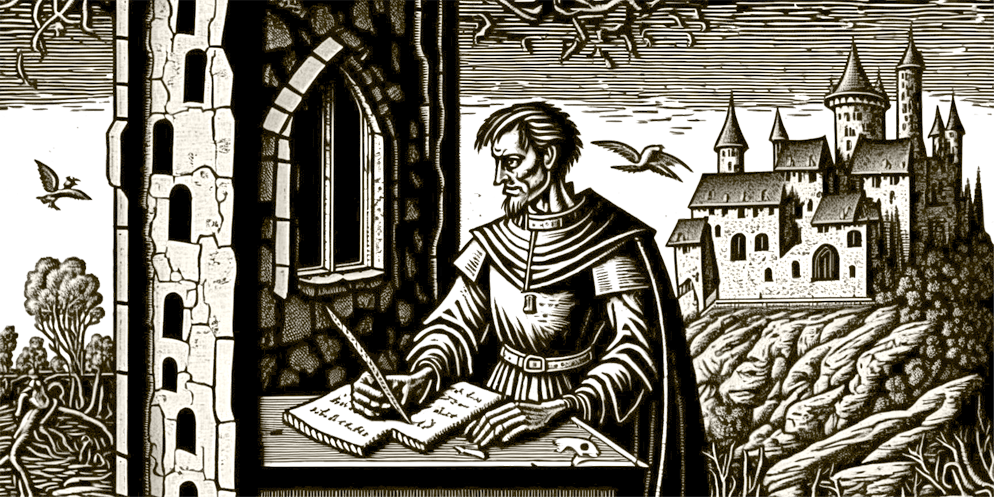
The Deputy Grand Master is led to the altar for the greeting, and then escorted to the East. He is rendered the honors of a Grand Officer, after which the Worshipful Master hands him the gavel. The Lodge is symbolically under his direction until the moment he returns the gavel to the Worshipful Master, with an order to continue the labors.
1. The Deputy Grand Master may not be seated on either of the columns without a request on his part to do so.
2. The Worshipful Master may in no case violate protocol with respect to the Deputy Grand Master in the part concerning relations with the Grand Master.
3. The rules of respect toward the Deputy Grand Master include permission to enter the "last remark" into the protocol of the labors. No one should ask for the floor on any question after he has finished his address. The Worshipful Master must, bearing this in mind, encourage the Brethren to speak before the Deputy Grand Master begins his address.
Honored Visitors
If a Brother-visitor unexpectedly arrives at an assembly of the Lodge who, by virtue of office, his standing in the Brotherhood, or for other reasons, deserves to be introduced by the Worshipful Master, the latter may proceed according to one of the following procedures:
1. Give the order that a group of senior Brethren lead the visitor to the altar and introduce him to the assembly; solemnly escort him to the East for the greeting. The Worshipful Master may ask him to be seated in the East.
2. Give the order that the First Expert (the Senior Deacon) lead the visitor to the altar and introduce him to the assembly (except in the case where the visitor is a Past Worshipful Master of this Lodge), and then escort him to the East, or to his place on the column.
3. Ask the visitor to stand in his place and introduce him to the Brethren, if that is more convenient for him. It must be remembered that the Worshipful Master must stand and remain standing until the conclusion of the introduction ceremony, if the visitor holds the rank of Worshipful Master or Past Worshipful Master, or holds some office in the Grand Lodge.
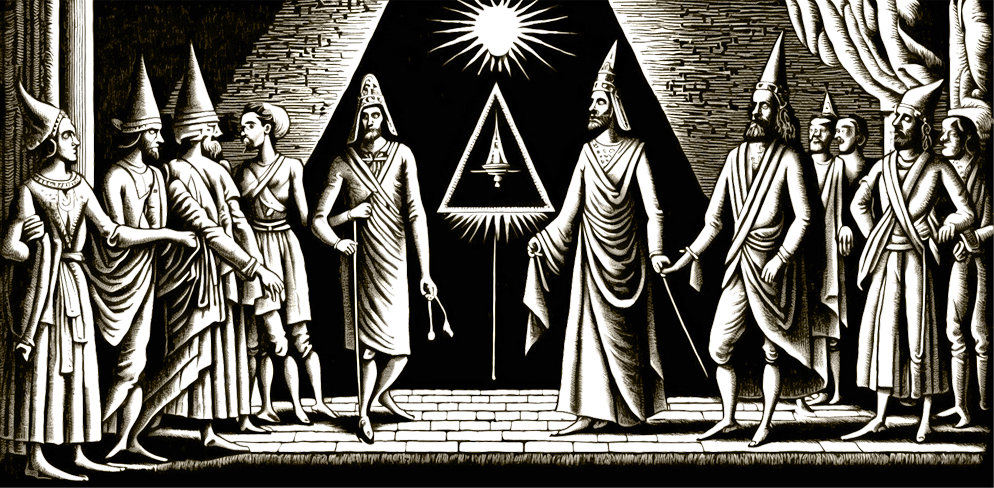
In the Mentor's Manual, MW A. D. Smith, Jr. wrote that it is unbecoming to entrust the Senior Deacon with introducing guests who hold the rank of Worshipful Master or Past Worshipful Master. This is the duty of the Worshipful Master. Although some confuse this duty with the duty of the Senior Deacon to conduct high-ranking guests into the Lodge.
Entry into the Lodge after the Opening of the Labors.
Entering the assembly hall of the Lodge through the Preparation Room (the Cave of Reflection) is not recommended. If any of the Brethren is late for the opening of the labors, he waits in the antechamber until he is permitted to enter, of which the Tyler will inform him. After which he enters the door and approaches the altar with ritual steps and greets the Worshipful Master and the Wardens, who answer his greeting standing or seated. This ceremony is important not only for the Brother who is late, but also for the entire Lodge, and therefore both sides must perform it carefully and correctly.
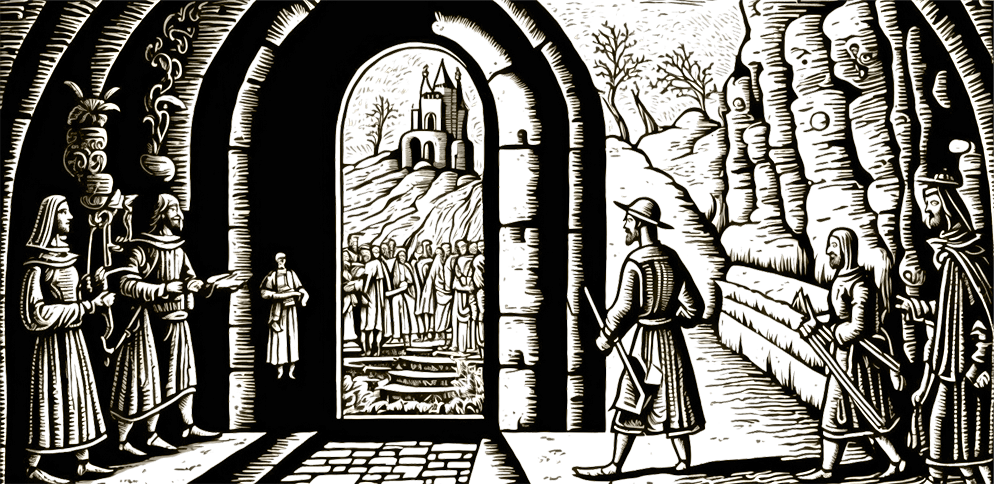
If the Brother who is late is not familiar with this procedure, or shirks its performance, it is permissible for the Senior Warden to inform him in his ear what must be done.
Etiquette Concerning Officers
Each Officer occupies his own place in the Lodge and has certain rights and duties, and certain honors must also be rendered to each officer; in this case the honors are rendered to his office, and not to the Officer personally as a man.
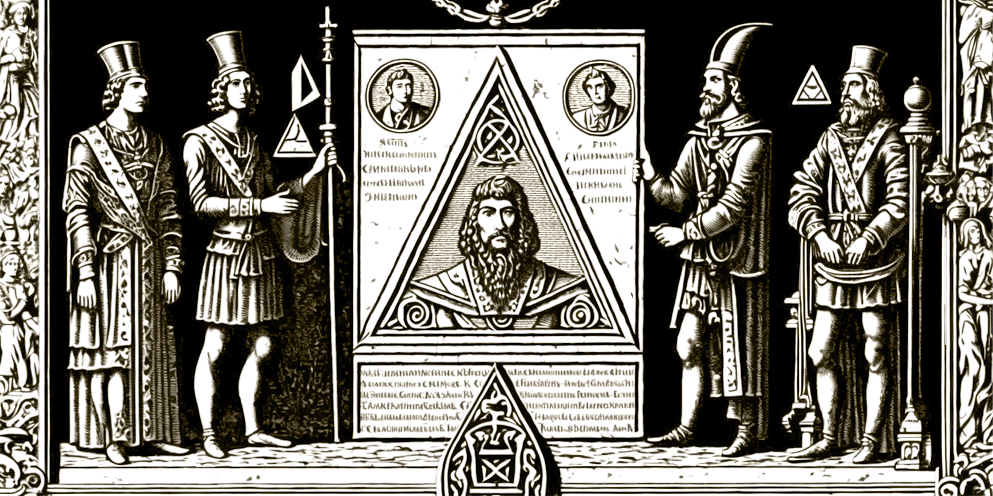
If an Officer of the Lodge is greeted hastily, if he is spoken to without proper respect and one does not even rise from one's place when speaking with him, this is a display of disrespect not only to the Officer, but also to the Lodge that chose him for this office. If the Worshipful Master secures from the rest of the Officers and Brethren of the Lodge the proper respect and appropriate honors for his own office, this creates in the Lodge an atmosphere of respect with regard to its other Officers as well.
The Questioning (Examination) of a Visitor
The content of the questioning of a visitor before entry into the Lodge is defined and fixed in the Constitutions and methodological guides. But the methods and the atmosphere of its conduct belong to the area of Masonic etiquette and protocol. Usually, the committee specially appointed to conduct the questioning meets with the visitor in a separate room and alone. Until the very conclusion of the questioning, the relations between the committee and the one being questioned remain official, and therefore the communication between them is of a formal character.
The Brethren who conduct the questioning must remember that the sole purpose of the questioning is to reliably establish the fact that the one being questioned is indeed a Master Mason and a full member of a regular and duly constituted Lodge, belonging to one of the Grand jurisdictions with which this Grand jurisdiction has mutual recognition. It is not part of their task to determine the level of command of the ritual or the circumstances of the personal, social, or professional life of the one being questioned. To the extent that the examination committee has the right to ascertain the belonging of the one being questioned to the Masters of regular Freemasonry, to that same extent the one being questioned has the right to ascertain the regularity of the Lodge that he is requesting the right to visit.
Therefore, he has the right to ask permission to look at the warrant of the Lodge. But what is to be done if the labors have already begun and the warrant, as is proper, hangs on the wall above the place of the Secretary? On the one hand, the rules of etiquette dictate the necessity of satisfying the curiosity of the visitor, but on the other, of not disturbing the peace of the lodge that has already opened its labors. In such a case, preference is given to the interests of the Lodge. The visitor should be informed in a friendly and benevolent manner that if he really wishes to see the warrant of the Lodge without fail, he must come at another time, before the ritual opening of the labors.
Even on the condition that the Brethren conducting the questioning and the one being questioned are satisfied with one another, the latter still does not have the right of access to the assembly hall until the Worshipful Master has given special permission for it. The committee brings the visitor into the antechamber and hands him over to the Tyler, who, in turn, ceremonially hands him over into the hands of the Junior Deacon. Visitation is a privilege, not the right of every master. His right is to request the opportunity to visit the Lodge, and the Worshipful Master possesses the right to refuse the right of visiting the assemblies of his Lodge to any Brother, except the Officers of the Grand Lodge.
If the Worshipful Master has decided to refuse the visitor the right to be present at the labors of the Lodge, etiquette requires that he summon the Senior Deacon to him and quietly ask him to go out to the antechamber and give the order to the Tyler not to admit the visitor to the assembly hall. Sometimes the reasons for which a visitor is refused the right to visit the Lodge in no way concern him personally, for example, when the conversation in the Lodge concerns purely internal affairs of the Lodge, or when a reprimand is to be issued to one of the Brethren.
Etiquette and the Landmarks
Before I take up this point, my Brethren, allow me to note: I know that the Grand Lodge of Virginia has not yet adopted or published any list of certain Landmarks "recognized" specifically by it. However, for me the Landmarks remain laws, rules, and norms belonging to Freemasonry as a whole, and if they disappear, then Freemasonry will disappear with them. Therefore the phrase "To observe the Ancient Landmarks…", in my opinion, is another way of saying "Not to act in a manner that may harm Freemasonry." I believe that the Landmarks are enumerated.
They are found in the Book of Constitutions, which was adopted by the Grand Lodge in 1791. They occupy a certain place in history. They encompass certain fundamental principles of ethical and moral conduct, which are the same in all times. Many believe that Masonic etiquette in itself is a fundamental principle of the Brotherhood, and in this capacity may be considered one of the landmarks.
Indeed, remove Masonic etiquette from our practice, and soon the Brotherhood will begin to decompose, fall apart, and, finally, simply cease to exist.
Correspondence with the Officers of the Grand Lodge.
Protocol requires that any correspondence addressed to the Grand Master, the Deputy Grand Master, the Grand Secretary, other Grand Officers, and members of the Grand Committees in their official capacity, and which requires a written reply, be properly formatted and bear an official character.
Even if the Grand Officer or member of the Grand Committee and the sender of the correspondence are close friends, this rule must be carefully observed, since this correspondence bears an official character and may be redirected to other Grand Officers, included in official reports and collections, and even reach printed publications, where a chummy tone is inadmissible.
It is also worth indicating in the letter the number and distinctive name of the Lodge to which the sender belongs, its address and jurisdiction. Since there are many Lodges in our jurisdiction, one should not expect a Grand Officer to remember the membership of every brother. The sender should also indicate his own position in the Lodge: Brother, Officer, Past Officer, member of a Committee. This information will save time for the recipient, who would otherwise be compelled to seek it out himself. In addition, what is very important, it will possibly speed up the reply.
In some cases, a letter addressed to the Grand Master or the Grand Secretary may contain information that concerns another Grand Officer or that will be of special interest to him. In such a case, a copy of the letter may be sent by mail to him. If this has been done, it is correct to add at the end of the letter a postscript of the following content: "A copy of this letter was sent on such-and-such a date to such-and-such a person."
If courtesy requires that the Worshipful Master of the sender's Lodge be made aware of the content of the letter, a copy of the letter is also sent to him, and a corresponding note is made in the letter itself about this.
The Hat of the Worshipful Master
The hat is presented to the Worshipful Master upon his entry into office, as a sign of his authority, and as a reminder to the Lodge that only the Worshipful Master wears a hat in the Lodge, while the rest of the Brethren of the Lodge remain with uncovered heads during the labors and celebrations. It is believed that this beautiful tradition originates from King Solomon, who wore a crown as a mark of dignity and authority.
It is said that the Worshipful Master recognizes only three authorities: the Great Architect of the Universe, death, and the Grand Master. He must always remove his hat during prayer, in the presence of death (including its announcement), and in the presence of the Grand Master (or his deputy).
The Master's hat must correspond to his attire: a silk top hat with a frock coat and tailcoat, a Homburg-style hat with a tuxedo, and an ordinary hat for an ordinary suit. Frivolous headwear should never be worn.
The Hat of the Worshipful Master
Non-Masons at Masonic Events
At Masonic events to which the uninitiated are invited, three basic rules of etiquette apply:
1. Non-Masons cannot be expected or required to participate in ceremonies or other formal events of a Masonic character.
2. Non-Masons, in this case, are guests, and the Freemasons are hosts, and therefore appropriate relations are observed between them.
3. There are some customs and provisions of etiquette that bear an esoteric character, for Freemasonry, and are never used in the presence of non-Masons. Other customs do not bear an esoteric character and may be used in the presence of non-Masons, of course if it is appropriate, at the discretion of the Worshipful Master. For example, the order of the Brethren and officers in a Masonic procession is not an internal ritual of the Order, and therefore it may be observed in the presence of non-Masons, as in the case of a banquet when the Sisters are guests.
Objection from One's Place
If a Brother of the Lodge believes that he has sufficient grounds to express his disagreement with something that is happening at the given moment in the Lodge, or believes that something said or done at the given moment offends him or other Brethren, or wishes to challenge the legality of what is happening in the Lodge, he must observe the following norms of Masonic etiquette:
1. He must rise from his place and greet the Worshipful Master.
2. Wait for the reply of the Worshipful Master.
3. If possible, briefly set forth his objections.
4. Greet the Worshipful Master again and take his place.
5. After this the Worshipful Master gives a reply, or undertakes the necessary actions.
6. The labors continue in the usual order.
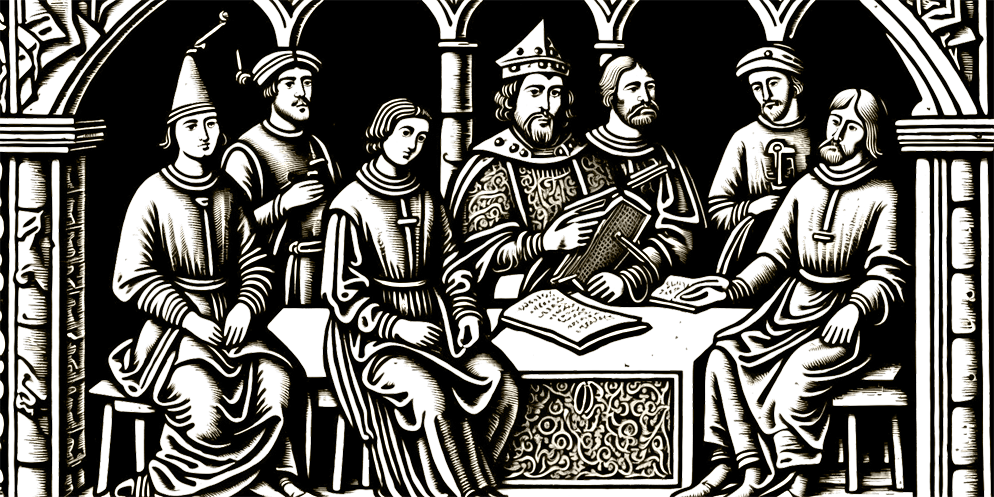
In any case, it is inadmissible to make decisions or undertake actions on one's own; this is the right of the Worshipful Master. The Brother simply submits his objections and does not propose or begin a discussion on the ways of correcting the situation, unless the Worshipful Master asks him to do so. The Brother's participation in this episode ends as soon as he has sat down after his address.
The Titles of Past Grand Officers
In American Grand jurisdictions, there usually exist several variants of titling for almost every one of the Officers. The correct form for one jurisdiction or another can be found in its General Regulations, in the section on Grand Officers. In most jurisdictions, the following titles are used:
1. The Grand Master is usually addressed as "Most Worshipful," which may be given in the abbreviation "M∴W∴". For the Grand Master the correct form of address is "Grand Master of Masons of the country ABC," and not "Grand Master of the country ABC."
2. A Past Grand Master has the same title and may be introduced as "Past Grand Master of Masons of the State of Virginia," but before his introduction it is worth ascertaining whether other Past Grand Masters of the same jurisdiction are present; in that case he must be introduced as "Most Worshipful (full name), Grand Master of Masons in the year 19xx." One must be careful not to fall into the trap and introduce him as "Most Worshipful (full name), Past Grand Master of Masons in the year 19xx." Why? Because in that year he was our Grand Master and did not acquire the status of "Past" until the time his successor was elected and installed!
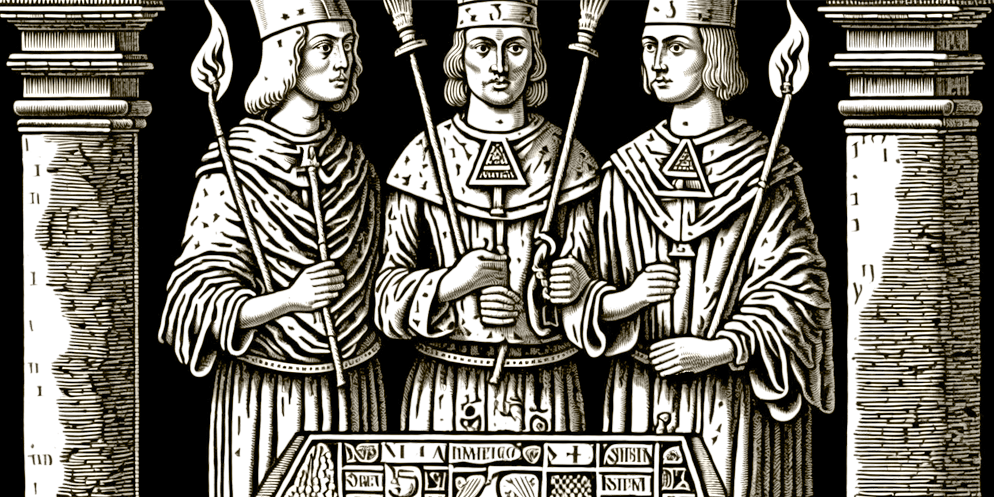
3. The same rules apply during the oral introduction of Past District Grand Masters and Past Deputy Grand Masters.
4. Every Freemason is called "Brother." And this title is used in any address to him in the Lodge. It is considered the greatest violation of etiquette to address a Freemason by his surname or as "Mr. So-and-so."
Past Worshipful Masters
In many societies an official, after the end of the term of his powers, returns to the same social status that he held before being elected to office. In Freemasonry the rules are different.
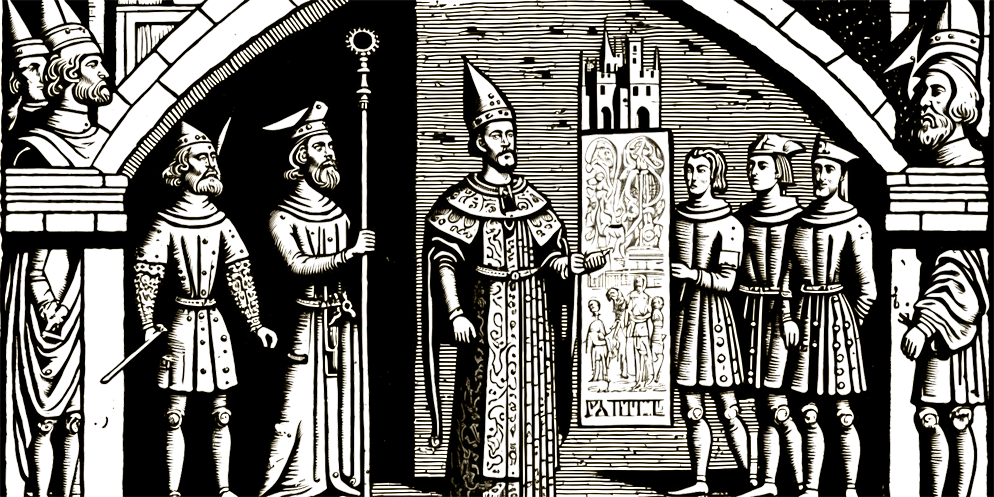
A Brother who has occupied the highest office in the Lodge subsequently receives a special Masonic status. This status, with its own identity and recognition, bears the name "Past Worshipful Master." Certain duties may be entrusted only to Past Worshipful Masters, which is fixed in Masonic legislation. From the point of view of etiquette, they have the right to respect in accordance with their standing. And from the point of view of protocol they have the right to a certain order of precedence. For their part, the Past Worshipful Masters, with respect to the Worshipful Master and the rest of the Brethren, submit to the same rules of etiquette as the rest of the Brethren of the Lodge.
The Preparation Room
The preparation room is a sanctuary for the candidate and the officers who prepare him. It is necessary that it be closed and that nothing disturb the candidate's seclusion. It is unacceptable, from the point of view of etiquette, to constantly watch over the candidate, and all the more so to make some unpleasant remarks to him. The officers who prepare the candidate must act with dignity. It is also not expected that they will discuss with the candidate any details of the ceremony in which he will take part.
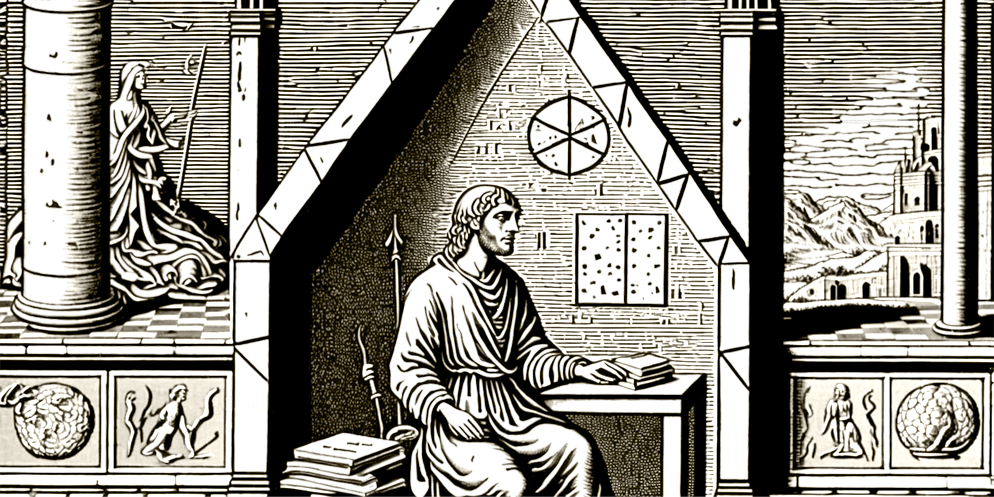
It will be correct to review whatever degrees he has already passed and to instruct him on how to answer questions correctly during the ritual. For example, a question should be answered with "Yes" or "No," and not "Yes, sir" or "No, sir," which is unacceptable in the Lodge.
Silence in the Lodge
When, in the course of the Lodge's work, one of the Brethren breaks the silence with extraneous conversations, the rustling of paper, or in some other way, the Worshipful Master should tap lightly with the gavel and call the Brethren to order.
If, during the work, an enforced pause arises, for example, some preparations need to be made, and the Worshipful Master sees that this requires a certain amount of time, he may strike the gavel and announce a recess. And only in this case are extraneous conversations, movement about the hall, informal communication, and so forth permitted, of course within the bounds of propriety and good manners.
The Reprimand
If the Worshipful Master has a need to express reproof to one of the Brethren who is conducting himself unworthily, it is worth doing this after the closing of the Lodge, face to face, in private.
If a need arises to issue a reprimand publicly during the labors of the Lodge, the choice of how and exactly when to do this remains with the Worshipful Master. However, etiquette requires that this be done in a friendly manner and impartially. Decency suggests that it be done in such a way as not to draw undue attention and not to disturb the peace.
Ritual Etiquette
The etiquette governing the labors of Initiation and Raising in a degree is very strict. During these labors there must be no conversations, whispering, laughter, or any other disturbances during the Ritual.
These labors are no occasion for merriment. There must be no unnecessary movements. The officers taking part in the ritual must never go beyond the bounds of their role and their duties. It is inadmissible for them to engage in conversations or pantomime, to make private comments or remarks about the candidate. Nothing beyond the Standard Ritual of Work, approved by the Ritual Commission of the Grand Lodge, neither as a whole nor in any of its parts. If additional ritual attire is used, it must be correct and appropriate.
The preparation of the hall must be completed before the beginning of the labors, and not carried out at the time when the Initiation or Raising of a candidate is taking place.
The Speaker in the Lodge / The Invited Speaker
If a speaker, responding to the request of the Lodge, has traveled a long way to deliver an address before the Brethren of the Lodge, the Worshipful Master is obliged to guarantee that the guest will be met at the airport, at the railway station, or at some other agreed-upon place. If he travels by his own automobile, he is escorted to the Lodge and comfortably and correctly accommodated in the Lodge.
His address must be brought to the consideration of the Worshipful Master / entered into the agenda. The Worshipful Master must introduce the speaker to the Brethren of the Lodge before he begins his address.
The Worshipful Master, or one of the Lodge's officers appointed by him, must remain with the guest after the closing of the Lodge and escort him to the hotel, the train, or the automobile, if that is exactly how he arrived. If he has with him teaching aids, manuals, or other items, assistance must be provided in their transportation. At this same assembly, or at the next assembly of the Lodge, it is necessary to make a decision to thank the invited Brother for his address, a copy of which the Secretary must send to him by mail.
Titles
The title of the Master of the Lodge — "Worshipful Master" — in his Lodge and in other Lodges or Jurisdictions, is official and is recognized for him anywhere. At the annual Assemblies of his own Grand Lodge this title gives him the right of unquestioned entry, and during visits to another Lodge — the right to the honors appropriate to his rank.
If a Worshipful Master is a member of any other Rite (the Royal Arch, the Consistory, and so forth), his title gives him no advantages or priorities (due to the absence of such an office as Worshipful Master), but it must be mentioned in accordance with protocol (that is, the ceremonial forms of address and marks of attention that are established as correct and proper in the official relations between Rites). The reverse is also true, when the Presiding Officer of any other Rite is present in a Craft Lodge or is a member of it. Although his title has no official status, Masonic protocol requires the use of the "correct" titling, as an application of good manners, during his introduction.
Non-Standard Situations in the Lodge
An unprecedented situation may suddenly arise in any Lodge. It may catch the Worshipful Master unawares, if neither he nor the Lodge has encountered the problem that has arisen before and has no instructions whatsoever for resolving the problem that has developed.
In most cases, non-standard situations have no relation whatsoever to etiquette. But in some, the essence of the question lies precisely in etiquette. Let us suppose that a guest has come to you from another Grand Jurisdiction, where the customs in the Lodge may differ radically from ours. And the guest does or says something unexpected. In this case, the Worshipful Master must address not the guest, but the Brethren of the Lodge. He must explain that the guest acted in accordance with the rules or customs that are accepted in his jurisdiction. In this way, he indirectly gives the guest to understand what exactly he did wrong, according to the rules and customs of this Lodge.
Note: If the Visitor Is Not at Fault, We Must Not Embarrass Him. THIS IS THE FOUNDATION of Etiquette — Not to Embarrass Him!
From time to time, especially delicate situations may arise. For these cases there exists a general principle for how the Worshipful Master is to act. He interrupts the labors and addresses the Lodge. He may:
1. Announce a short recess and calmly consider the situation;
2. Summon one of the Brethren to him for consultation;
3. Conclude the labors, if more time is needed for deliberation and resolution of the situation;
4. If necessary, give a committee the task of studying the situation and providing specific recommendations.
Only after he has considered all the facts and weighed the possible decisions in terms of long-term consequences will the Worshipful Master resume or convene the labors and announce his decision.
Visiting the Sick
The observance of Masonic etiquette is not limited to the assembly of the Lodge. A certain etiquette must characterize a Freemason (be part of the individuality of a Freemason). When, for example, a Freemason visits a Brother who is sick, or infirm, or whose abilities are in some other way limited, he should:
1. Give advance notice of the visit, so as not to come at an inconvenient time;
2. Inform him that he, in this case, is acting on behalf of the Lodge;
3. Begin the conversation with fraternal greetings from the Lodge;
4. Adapt the duration and character of the visit in accordance with the information about the Brother's state of health obtained from his relatives.
One should not inform the Lodge of every visit, unless the Brethren have previously expressed a desire to learn of the sick man's condition, or unless he himself has expressed a desire to inform the Lodge or to express gratitude for the care.
Etiquette and the Worshipful Master
The Worshipful Master is the officer of the lodge whose first duty is to allow nothing that could cause harm to the Lodge entrusted to him. It is precisely for this reason that he cannot permit negligent observance of etiquette.
If, upon taking his place in the East, the Worshipful Master sees that in his Lodge etiquette is treated with indifference, or is observed only from time to time, he must as quickly as possible address the Officers and Brethren of the Lodge on this matter. What place does etiquette occupy in Freemasonry?
It does not occupy SOME PARTICULAR place! It occupies all the particular places!
It is observed always and everywhere, where and when the Brethren gather, speak, or act in the name of Free Masonry! It is precisely for this reason that it is called "Masonic."
If it pertained only to the Ritual of the Degrees, then the Worshipful Masters might begin to consider that this is not their sphere of activity, that the observance of etiquette is the concern of the Grand Lodge or the Grand Officers. But etiquette is not only in the Ritual; it is everywhere, and in isolation from one another Etiquette and Ritual have no meaning. The Grand Lecturer, the Grand Provost, and their committees may conduct consultations and give recommendations regarding the observance of etiquette in the Lodges, but they cannot interfere.
The Worshipful Master bears full responsibility for the observance of etiquette, just as for everything else that happens in the Lodge. Like any leader, the Worshipful Master has the right to delegate his powers, but the responsibility remains with him. Our brother Harry S. Truman put it well — "The buck stops here!!" The Worshipful Master is the Master of the etiquette of the Lodge, in the very same sense that he is the Master of the Lodge. To direct the observance of etiquette in the Lodge is his duty, just as it is to direct the labors of the Lodge, the votings, the discussions, and the conferral of Degrees.
The Lodge is bound together not by steel bands, but by the silken ties of brotherhood, woven from interest, friendliness, good times, and useful fraternal fellowship. A Freemason is not necessarily a member of a lodge. In the broad sense, he may be any person who daily strives to live a Masonic life and to serve the needs of the Great Architect wisely.
Masonic Etiquette, Protocol and Decorum Information on Masonic Etiquette Masonic Education Series Handbook Concord Lodge # 307 Vienna, Virginia , 1995 The Grand Lodge A.F. & A.M. of the State of Virginia, USA