




On April 1, 1919, in the city of Kamianets-Podilskyi, the Grand Lodge of Ukraine "Saint Andrew the First-Called" issued a manifesto in which it informed all the Free Masonic jurisdictions of the world of the creation of the Grand Lodge of Ukraine and requested its recognition.
The manifesto was signed by the Grand Officers of the Grand Lodge of Ukraine "Saint Andrew the First-Called": Symon Petliura - Grand Master of the GLU; General of the UPR Army Vsevolod Petriv - First Grand Warden; F. More (F. More) - Second Grand Warden; Andrii Livytskyi - Grand Secretary. The manifesto of the GLU was published in the "Bulletin du Bureau international des relations maconniques," No. 4 for 1919.
The collection "Annuaire de la Maconnerie Universale 1923, p. 279," published in Bern in 1923, states that the Grand Lodge of Ukraine included the following Worshipful Lodges: "Immortality" (founded in Kyiv in 1784), "Three Columns" (founded in Kyiv in 1796), "United Slavs" (founded in Kyiv in 1810), "Osiris" (founded in Kamianets-Podilskyi in 1818), "Love of Truth" (founded in Poltava in 1818), "Pont Euxin" (founded in Odesa in 1803).
This same collection also mentions the existence of lodges in Kharkiv and Chernihiv. At the same time, a scandal arose between the Grand Masters of the GLU, Symon Petliura, and another "Grand Master," Serhii Morkotun, which made its way onto the pages of both Masonic and general socio-political publications.
After the departure from Freemasonry of the leader Mykhailo Hrushevskyi, Serhii Kostiantynovych Morkotun (Markotun) advanced toward Masonic leadership - the Worshipful Master of the lodge "Saint Volodymyr Equal-to-the-Apostles," who in 1918 was preparing in Kyiv the opening of the GLU in alliance with the Grand Orient of France and the Italian Grand Lodge.
The Freemasons of S. Morkotun's circle, unlike the Ukrainian patriot-Freemasons of S. Petliura's circle, agreed only to limited autonomy for Ukraine within the Russian Federation. S. Morkotun declared himself the Grand Master of the Grand Lodge of Ukraine "United Slavs." However, this Grand Lodge was most likely opened only on paper...
Gathered around S. Petliura were the Freemasons: A. Nykovskyi, S. Shelukhin, A. Livytskyi, Ya. Kotliarevskyi, N. Shumnytskyi, F. More, V. Prokopovych... With the transfer of power in Ukraine to the Directorate of the UPR (from December 13, 1918), Ukrainian Freemasons took over the leadership of Ukraine. The Prime Minister became the Freemason Volodymyr Chekhovskyi; the commander of the troops (Supreme Otaman of the UPR Army) and the second person in the Directorate became the Freemason Symon Petliura; the Minister of Education became the Freemason Petro Kholodnyi; and the Minister of Justice became the Freemason Oleksandr Shelukhin. In the second half of February 1919, S. Petliura became the leader of the Directorate.
M. Svytkov writes that in the spring of 1919, in Kamianets-Podilskyi, the "Grand Lodge of Ukraine" (GLU) was officially proclaimed. The Grand Master of the Grand Lodge (head of Ukrainian Freemasonry) became Symon Petliura. According to M. Svytkov's data, the Grand Lodge of Ukraine united 7 local lodges, 83 Masonic circles, and 800 brother-Freemasons.
Symon Petliura announced that the Kyiv Lodge "Saint Andrew the First-Called" had been transformed into the Grand Lodge of Ukraine. The Grand Lodge of Ukraine appealed to the French Freemasons with a request to assist in the international recognition of the Ukrainian state. S. Petliura believed that Ukraine should become a model of a "Masonic Republic."
Supporters of Ukrainian independence joined the Grand Lodge of Ukraine. These were predominantly Ukrainian federalists, Ukrainian Socialist-Revolutionaries, and Ukrainian Social-Democrats: Andrii Livytskyi (Deputy Prime Minister and Minister of Justice of the Directorate) became the Grand Secretary of the Grand Lodge; Vsevolod Petriv (general, commander of the Volhynia Army Group) - the First Grand Warden; Franz More - the Second Grand Warden; the masters of the lodge were A. Nykovskyi, S. Shelukhin, S. Yefremov, A. Shulhin, Ya. Kotliarevskyi, M. Shumnytskyi, V. Prokopovych.
M. Shumnytskyi appealed for assistance in the recognition of the GLU to the Grand Master of the Grand Lodge of Switzerland, the Chancellor of the International Masonic Association, Edouard Cartier La Tente. The Grand Lodge of Switzerland recognized the GLU and petitioned on its behalf within the International Masonic Association.
S. Morkotun (who also called himself the Grand Master of the Grand Lodge of Ukraine) addressed a letter to the French Freemasons in which he accused S. Petliura of separatism and of usurping the chair of the Grand Master of the Grand Lodge of Ukraine.
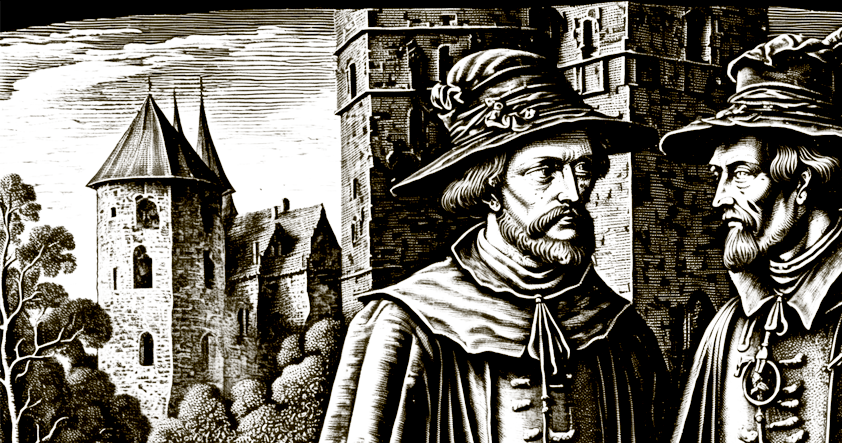
S. Morkotun managed to turn many Freemasons against the recognition of the "Petliurite" Grand Lodge of Ukraine; in his open letter, S. Morkotun attributed to S. Petliura things that could provoke a negative reaction among the French - sympathies for Germany and the Roman Pope, "Bolshevism," and the organization of Jewish pogroms...
This circumstance complicated the course of negotiations between S. Petliura and the Masonic circles of the Entente. After the death of S. Petliura, the Grand Master of the GLU became S. Kotliarevskyi (Semen Kotliarevskyi, b. 1886, an officer of the UPR Army); the Grand Secretary was F. More; the Grand Treasurer was Iliashevych (Valerian Iliashevych, b. 1882, a colonel of the UPR Army).
It is known that the GLU included: Colonel Mykola Shumytskyi (a member of the Ukrainian delegation at the Paris Peace Conference, a member of the Ukrainian Diplomatic Mission in France).
The process of the revival of Freemasonry in Ukraine in the mid-1990s.
In 1993, the French Freemasons (the GNLF) in Paris opened the lodge "Three Columns No. 785" for the formation of Freemasonry in Ukraine; the Grand National Lodge of France declared its intention to spread Freemasonry in Ukraine.
In 1993-1995, several residents of Lviv and Kyiv became members of the lodge "Three Columns." The sponsors of the Ukrainian Freemasons were well-known Freemasons of France from the lodge "Voice of Ukraine" (Paris), Ukrainians by origin: Doctor of Medicine Ivan-Yaroslav Musianovych, publishing house director Liubomyr Huzar, composer Aristid Virsta, artist Themistocles Virsta, and others.
In 1996, the Worshipful Lodge "Three Columns" began to work in Kyiv, headed by a Ukrainian Worshipful Master and Freemasons from Kyiv, Lviv, Odesa, and Kharkiv. During the Masonic labors in the Lodge "Three Columns," the collars (aprons) of Ukrainian Freemasons of the early 20th century were used (the collar of S. Petliura, which had been preserved in France). In the autumn of 1999, the Lodge "Kameniar" (No. 1142, GNLF) was opened in Lviv, and in the autumn of 2000, in Odesa - "Golden Acacia" (GNLF, No. 1309). On the basis of four Ukrainian lodges (Kyiv, Kharkiv, Odesa, and Lviv), which had previously been in the Province of "Lutetia" of the GNLF, in 2001 the District of "Ukraine" of the Regular GNLF was created, headed by the Grand Provincial Master Oleksandr Kryvenko.
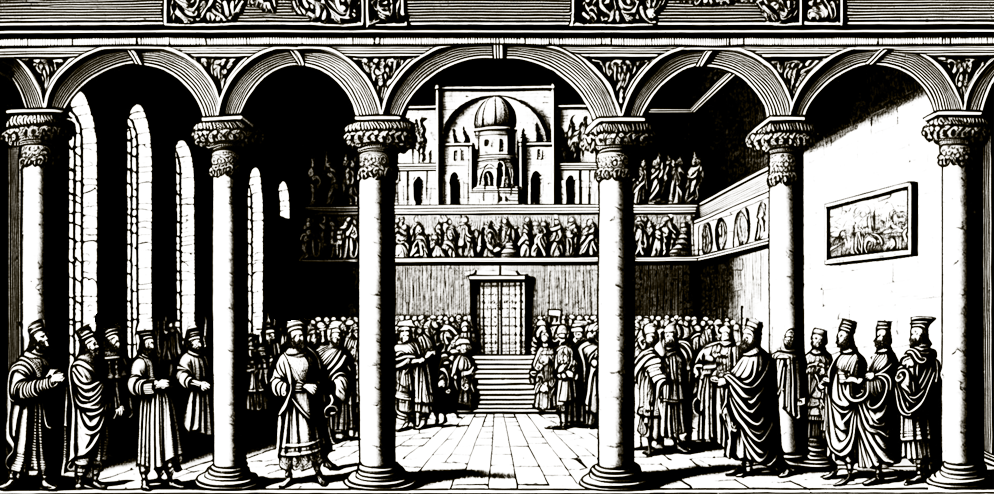
On September 24, 2005, in Paris, in the Grand Temple of the Grand National Lodge of France, together with the Grand Lodge of Austria, the Grand Lodge of Ukraine was proclaimed and created.
The consecration was performed by the Right Worshipful Brother Jean-Charles Foellner, Grand Master of the GNLF; he was assisted by the Right Worshipful Brother Michael Kraus, Grand Master of the Grand Lodge of Austria (First Grand Consecrating Warden), and the Right Worshipful Brother Jean-Claude Tardiva (Second Grand Consecrating Warden)."
Present at the ceremony of the creation of the "Grand Lodge of Ukraine" were foreign delegations from Austria, Latvia, Morocco, Moldova, Romania, Serbia and Montenegro, Portugal, Poland, Belgium, Germany, the Czech Republic, Turkey, Hungary, and Canada (Quebec).
The new Grand Lodge of Ukraine consisted of four lodges of the former District of "Ukraine" and the lodge "Light," which had joined them (it was created in Lviv by Austrian Freemasons).
The Grand Lodge of Ukraine is recognized as regular - created according to all the rules; it was recognized by the principal lodges of the world.