




The Twelve Fundamental Precepts of Freemasonry
I. Faith in the Great Architect of the Universe.
The foundation of Freemasonry is faith in the Almighty, the Great Architect of the Universe. It does not contradict religious beliefs; on the contrary, it fosters their union in a single pursuit of harmony and fraternity.
II. Adherence to Traditions and Rituals
The Masonic Brotherhood is grounded in rituals and symbolism passed down from generation to generation, preserving the constancy and purity of its traditions.
III. Membership in the Order
The Brotherhood is a closed Order, into which only free men of good repute are admitted, men who meet high moral standards and acknowledge the principles of humanity and fraternity.
IV. The Symbolism of Rituals
Freemasons are obliged to observe rituals that carry a deep symbolic meaning. They are a means of spiritual growth, self-knowledge, and initiation, which are the foundational ideals of the organization.
V. Spiritual Development
Freemasonry fosters the spiritual self-improvement of its members and the dissemination of humanistic ideas in society.
VI. Tolerance and Mutual Respect
The members of the Brotherhood are obliged to respect one another's religious and worldview convictions, avoiding disputes on religious and political topics. Freemasonry is grounded in fraternity and harmony.
VII. The Solemn Oath.
Upon receiving initiation, the Freemason takes a solemn oath over the Book of the Sacred Law, which is an integral part of his spiritual duty.
VIII. The Light of Freemasonry
The labor of the Lodge is conducted in a closed setting, where the three Great Lights of Freemasonry are always present — the Book of the Sacred Law, the Square, and the Compasses — in accordance with the principles of the constitution of the Universal Brotherhood and the traditional order.
IX. Requirements for Candidates
Only worthy, moral, and spiritually mature men are admitted to the Brotherhood, men capable of perceiving the mysteries of Freemasonry and the boundlessness of knowledge.
X. Loyalty to One's State
The Freemason honors his Homeland, observes its laws, and shows respect for the lawful authority, for his duty is to work for the benefit of society and to honor every inspired Labor.
XI. Secrecy and Responsibility
The members of the Brotherhood undertake, while maintaining their worthy and highly moral standing, not to reveal the essence of the spiritual foundations of the organization, to preserve the secrets of the Order, and at the same time to spread its moral influence upon society.
XII. Brotherly Assistance
The members of the Brotherhood undertake to render one another brotherly assistance without hesitation under the most difficult of circumstances, even at the risk of exposing themselves to danger. They must always preserve calm and equanimity of spirit.
The Landmarks of Freemasonry
The Landmarks are the immutable principles of Free Masonry that define its structure, traditions, and laws. (From "A Text Book of Masonic Jurisprudence," 5th edition, London, 1895.)
Freemasons have a system of recognizable signs, words, and symbols that serve for mutual recognition.
II. The Division of Symbolic Freemasonry into Three Degrees
Freemasonry is divided into three principal degrees: Apprentice, Fellow Craft, and Master.
III. The Legend of the Third Degree
The legend of Hiram is the central symbolic element of the third degree of Freemasonry.
IV. The Grand Master
The Brotherhood is governed by a presiding officer called the Grand Master, who is elected from among the brethren.
V. The Powers of the Grand Master
The Grand Master has the right to preside over any assembly of the Brotherhood, regardless of the time and place of the assembly.
VI. The Founding of New Lodges
The Grand Master has the exclusive right to establish new Lodges and to permit them to work.
VII. Initiation Without Observance of Time Periods
The Grand Master has the right to grant permission to initiate any brother into any degree without observing the time periods prescribed by tradition, if this is in the interests of the Brotherhood.
VIII. Exclusive Powers
The Grand Master has the right to initiate into Freemasonry, bypassing the traditional procedures.
IX. Assemblies in Lodges
Freemasons have the right to assemble exclusively in regular Lodges.
X. The Governance of the Lodge
When the brethren assemble in a Lodge, they are governed by the Master of the Lodge and two Wardens.
XI. The Guarding and Security of the Lodge
The Lodge must be reliably protected against the intrusion of the uninitiated.
XII. The Right of Representation
Every Freemason has the right to representation at any general assembly of the Brotherhood, as well as to duly instruct his representatives.
XIII. Appeal to the Grand Lodge
Every Freemason has the right to appeal to the Grand Lodge or the General Assembly of Freemasons concerning the decisions of his brethren.
XIV. Visiting Regular Lodges
Every Freemason has the right to visit or to be present at the assembly of any regular Lodge.
XV. The Examination of Visitors
No visitor unknown to the brethren present, or to one of the brethren, has the right to enter the Lodge until he has been questioned or tested according to the ancient traditions.
XVI. The Independence of Lodges
No Lodge has the right to interfere in the internal affairs of another Lodge, or to confer degrees upon brethren who are members of other Lodges.
XVII. Submission to Masonic Legislation
Every Freemason submits to the Masonic laws of his jurisdiction (according to his place of residence), regardless of his affiliation with a particular Lodge.
XVIII. Requirements for Candidates
Candidates for initiation into the Brotherhood must meet the defined requirements.
XIX. Faith in the Great Architect of the Universe
Faith in the existence of God, who is called the "Great Architect (Builder) of the Universe," is an obligatory condition of membership in the Brotherhood.
XX. Faith in the Immortality of the Soul
The Freemason must acknowledge the idea of Resurrection to Eternal Life.
XXI. The Book of the Sacred Law
The Book of the Sacred Law is an immutable attribute of every Lodge.
XXII. The Equality of Freemasons
All Freemasons are equal among themselves, regardless of social status.
XXIII. The Secrecy of the Brotherhood
Freemasonry adheres to the principle of secrecy.
XXIV. The Symbolism of the Craft
The grounding of speculative (worldview) science upon operative (active) principles, as well as the symbolic use and explanation of the terms of this craft for the teaching of religious and
moral principles.
XXV. The Immutability of the Landmarks
The Landmarks of Freemasonry are inviolable.
Anderson's Constitutions
Anderson's Constitution comprises the ancient precepts of the FREE MASON. The ancient laws of the Lodges overseas, intended to be proclaimed at the initiation of new Brethren or by decree of the Master.
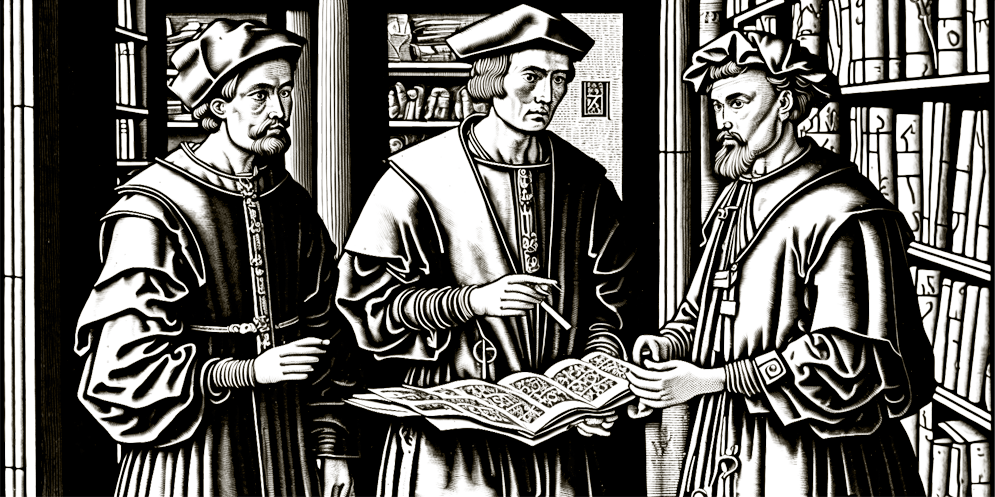
I. Of God and Religion.
The Free Mason is obliged, by virtue of the promise given by him, to obey the moral laws; and if he rightly understands the Royal Art, he will never become a foolish atheist or an irreligious freethinker.
But whereas in ancient times the Free Masons were obliged in every country to profess the religion of that state and that people among whom they found themselves, in our time it is considered more reasonable to oblige them to belong only to that religion in which there is agreement among men, leaving it to them to determine their own religious convictions. This means that the Free Masons must be men of virtue and faithfulness — that is, men of honor and honest men, without regard to personal convictions and confessional affiliation. Whereby Freemasonry is transformed into a force that unites men who, under other circumstances, would have been divided by an insurmountable chasm.
II. Of the Secular Authority, Supreme and Subordinate.
The Free Mason is a loyal subject of the secular authority wherever he may dwell and work. He must never take part in rebellions and secret evil designs against the peace and welfare of the people, nor conduct himself improperly toward the appointed representatives of the authority. For inasmuch as Freemasonry has suffered in all ages from wars, bloodshed, and turmoil, just as much have the ancient Kings and Princes been favorably disposed, ever granting the masons aid by virtue of the latter's peaceableness and faithfulness, ever giving worthy rebuff to their enemies and contributing to the legendary good repute of the Brotherhood, which flourished in times of peace.
Thus, if a Brother should rise up against the state, none shall join with him in that rebellion, but they shall grieve for him as for any unfortunate man; however, if he is condemned for that one crime alone, the Brotherhood, notwithstanding its truly loyal position by its very essence, may and must declare its non-participation in his rebellious impulse, and furthermore give no cause and not multiply envy toward the existing lawful authority. Moreover, he cannot be expelled from the Lodge, and his bonds with it shall remain inviolable.
III. Of the Lodges.
A Lodge is the place where Free Masons gather and work. Hence, the assembly, or duly organized society of Free Masons, is also called a Lodge; every brother must belong to some Lodge and submit to its Internal Regulations, as well as to the General Regulations. A Lodge is of a local or united character, which can best of all be understood by visiting it, as well as by familiarizing oneself with the Regulations of the General, or Grand, Lodge, which are appended to the Constitution.
In ancient times, no Master or Brother had the right to fail to attend the Lodge, especially in the case where he had been forewarned of it in advance and without a serious, valid reason, after consideration of which the Master and Wardens would not have concluded that strict necessity had prevented his presence.
The persons admitted to membership in the Lodge must be virtuous and truthful, free-born, of mature and rational age; they cannot be tributaries and bondsmen, nor women, and furthermore they must be men who are not dissolute and not of ill fame in society, but only of good repute.
IV. Of Masters, Wardens, Brethren, and Apprentices.
All preferences and distinctions among Free Masons rest solely and only upon true virtues and personal merits; for only thus can one well serve the Lord, not shame the Brethren, and not dishonor the Royal Art.
Therefore no Master or Warden can be chosen as such by virtue of his high station, but only by virtue of his personal merits. It is impossible to set forth all that is proper in written words, and therefore every Brother must attend the assemblies and occupy in them the place befitting him, in order to master everything in the manner that is characteristic of our Brotherhood.
Only this much will be known to the Candidates: that no Master may take an Apprentice unless he is sufficiently acquainted with him; unless he is a sound young man, free of deformities and bodily defects that might hinder his learning of the Royal Art, his service to the Lord, and his being accepted into the Brethren, and thereafter into the Fellow Crafts, even after he has worked in the first rank for the term determined by the traditions of his country; unless he descends from worthy parents; and only if it is precisely known that he meets all these requirements may he be granted the honor of becoming a Warden, thereafter the Master of the Lodge, thereafter Grand Warden, and in time Grand Master of all the Lodges, depending upon his merits.
None of the Brethren can become either a Warden without having worked a certain term in the degree of Fellow Craft, or a Master without having worked as a Warden, or a Grand Warden without having worked as Master of the Lodge, or a Grand Master without having worked, prior to his election, in the degree of Fellow Craft, while at the same time being a descendant of most noble parents, or being a nobleman of high society, or being a renowned scholar, or an architect, or another artist, being at the same time a descendant of most noble parents, having thereby earned by his merits a good repute and high esteem in his Lodge.
By the ancient precepts and regulations, these rulers and governors of the ancient Lodges, supreme and indubitable, must be met with the full obedience of all the Brethren in the associations subordinate to them, with all due humility, love, reverence, and sincerity.
V. Of the Governance of the Labor of the Brotherhood.
All Free Masons must diligently work on weekdays in order to live in prosperity on the days of rest; and the time of labor, determined by the laws of their country or confirmed by custom, must be carefully observed.
The most experienced of the Fellow Crafts is appointed or chosen as Master or Warden over the Lord's Labor. Those who work under his command are to call him Master. Free Masons must avoid all quarrels, not call one another by offensive words — but call one another only "Brother" or "Friend"; they must conduct themselves courteously both within the Lodge and beyond it.
The Master, who knows himself to be capable of skill of mind, must, nevertheless, treat the Lord's Labor and the fair distribution of its fruits with extreme prudence and reason, as though they belonged to him himself; he must not endow any of the Apprentices or Fellow Crafts with a greater share than that which they truly deserve.
Both the Master and the Masons, who justly receive their wages, shall remain faithful to the Lord and shall carefully complete their work, be it labor or travel, and shall not regard as labor that which is ordinarily accepted as travel.
No one must show envy toward the welfare of a Brother, hindering him from laboring or taking away his work in order to complete it himself, being capable of this; for no one is able to complete another's labor to the glory of the Lord worthily, without being thoroughly acquainted with the drawings and sketches of the one who began this work.
When a Fellow Craft is chosen as Warden of the works under the auspices of the Master, he remains faithful both to the Master and to his Brethren; he carefully oversees the execution of the labor to the glory of the Lord in the absence of the Master; and the Brethren must submit to him in all things.
All Free Masons engaged in the performance of the works humbly receive their wages without grumbling and indignation, and do not leave the Master until the labors are completed. The young Brother should be instructed in labor, in order to prevent his spoiling of the material, which entails legal proceedings, and in order to continue the tradition of brotherly love.
All the tools of labor used in the work are inspected and approved by the Grand Lodge. No bonded laborer may engage in true Free Masonry, and no Free Mason may work together with a bondservant stonemason, except in cases of extreme necessity; it is likewise forbidden to teach unfree laborers and Free Masons who have not been accepted that which ought to be taught to a Brother and Friend.
VI. Of Conduct.
A. In the Lodge after its constitution and opening
One may not hold private gatherings and separate conversations without having obtained permission to do so from the Master; one may not converse about anything indecent or unworthy; one may not interrupt the Master, or a Warden, or any Brother who is addressing the Master. One may not behave too freely and in a buffoonish manner, if the Lodge is occupied with sacred or serious labor; under no conditions and in no guise may one use unworthy expressions; one should render due reverence to the Master, the Wardens, and the Brethren, and bestow honors upon them.
Upon the submission of any complaint, the Brother who is found guilty is subject to the consideration of his case and the rendering of a ruling by the Brethren of the Lodge, who are faithful and competent judges in disputes of this kind (except in cases of appeal to the authority of the Grand Lodge), to which the guilty party must also appeal, except in those cases where a general assembly of the Brethren might lead to a delay in the performance of the labors to the glory of the Lord, and in such a case a separate ruling is possible; however, the force of the Law should not be resorted to in the consideration of any Masonic lawsuits, except in those cases where the necessity of such recourse is evident to all the Brethren of the Lodge.
B. Conduct in the Lodge after the closing of the works, while the Brethren have not yet dispersed
One may amuse oneself with innocent conversation, cheering one another according to one's abilities, while avoiding all immoderation and not compelling any of the Brethren to drink or eat more than he would wish, or hindering him from going where his intentions or affairs lead him, or uttering insults and crude things that hinder the pleasant and free flow of conversation, for this would destroy our Harmony and subject our worthy aims to mockery. Therefore no private feuds and disputes may cross the threshold of the Lodge, and especially feuds and disputes concerning questions of religion, nations, and the structure of the state, for we, as Free Masons, belong to a single religion, of which it was spoken above, and also belong at the same time to all nations, peoples, families, kindreds, and tongues, and likewise keep aloof from all and any politics, which, until it threatens the prosperity of the Lodge, we intend to avoid hereafter as well.
C. The Conduct of Brethren at meetings beyond the consecrated outer walls of a duly opened Lodge.
One should courteously greet one another as you will be taught, calling one another Brethren, freely giving one another counsel with that measure of detail which will be deemed fitting and sufficient; in doing so one should endeavor not to be seen or heard by outsiders; one should not resort to attacks upon one another, observing that tradition, respect, and reverence which ought to be maintained in one's relations with any Brother, as well as with a non-Mason. For although all Free Masons are Brethren who stand upon one level, Freemasonry does not deprive a person accepted into the Brotherhood of respect and high standing in society; rather, it adds to his dignity, especially if he has earned the esteem of the Brotherhood, which always bestows honors upon the worthy. One should avoid foolish manners.
D. Conduct in the presence of non-Masons
One should observe caution in words and manners, so that even the most inquisitive of non-Masons could not discover anything of that which ought not to be revealed to him; in some cases one should change the subject of conversation and steer around him for the better good of our most esteemed Brotherhood.
E. Conduct at home and among acquaintances
One should act as befits a moral and wise person; in particular, it should be determined that neither your family, nor your friends, nor your neighbors should know about the cares of the Lodge and the like; in these matters you must be guided by the dictate of your own honor and the honor of the Ancient Brotherhood, by virtue of reasons that will not be spoken of here.
One should also act in accordance with one's health, not lingering too long and too far from home after the completion of the assembly of the Lodge, and also avoiding gluttony and drunkenness, so that your families do not feel humiliated and deprived of attention, and so that your work does not suffer.
G. Conduct with an unfamiliar Brother
You must subject him to cautious examination by those means which prudence and experience will suggest to you, so that your trustfulness and ignorance may not be exploited by an impostor, whom you ought to ignore with contempt and resolve, while making efforts to give him not even a hint of true Knowledge.
However, if you have ascertained that before you stands a true and faithful Brother, you must render him due reverence; and if he is in a difficult state, you must render him every possible assistance, or else point out to him the way to obtaining it: for example, you may give him work for several days, or recommend him to another employer.
However, you are not obliged to do anything that exceeds your own abilities and capacities — only to give preference to a poor Brother, who is at the same time a virtuous and faithful man, over other poor people in the same circumstances.
And, finally, all these precepts you are obliged to fulfill, just as the other laws that are transmitted to you in the same manner; you must cherish in your hearts brotherly Love — the foundation, glory, and crown, that cement which binds this Ancient Brotherhood. Avoiding all and any feuds and disputes, slanders and insults, do not permit others to create slanders against a worthy Brother, but defend his honor and render him good services to the extent that your own honor and safety permit — but no further.
And if any of the Brethren should do you harm, you should, in accordance with the worthy ancient custom, turn to your own or to his Lodge, and from there you may appeal to the authority of the Grand Lodge at its quarterly assemblies, and from there — to the authority of the annual Assembly of the Grand Lodge.
However, one should resort to this only if the matter cannot be resolved in any other way, after patiently and attentively listening to the counsel of the Master and the Brethren of the Lodge, who may help you avoid recourse to the non-Masonic Law, or else, on the contrary, will contribute to the swift resolution of all your affairs in court with the greatest possible justice and to your benefit, but with full respect for the Brethren.
The Master and the Brethren should themselves offer their services as mediators, and the brethren who are conducting the lawsuit should accept such an offer with gratitude; and in those cases where such mediation will not bring greater benefit to the matter, they should nevertheless continue the lawsuit or the proceeding, but without anger and rancor (at the utmost — not in the commonly accepted sense of the word), doing and saying nothing that threatens brotherly Love.
Good relations between the Brethren should be established and maintained, so that the beneficial influence of Freemasonry upon society and people may be evident to all. Thus all Free Masons have acted since the beginning of the World and will act until its end.
AMEN, SO MOTE IT BE.