




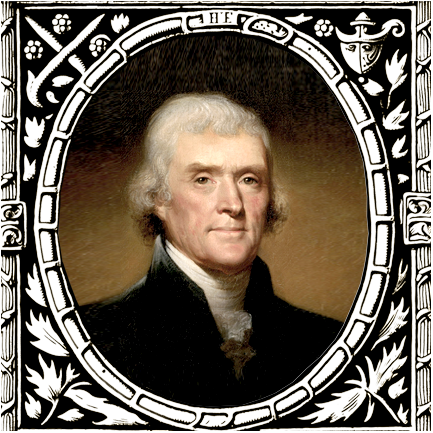
Thomas Jefferson
1743-1826
A statesman, diplomat, philosopher, builder of the American democratic system, participant in the American Revolution, the 3rd President of the United States, one of the Founding Fathers of the United States, Chairman of the committee that drafted the Declaration of Independence, a national hero of the United States, and a Freemason. He was the founder of the University of Virginia and the Library of Congress, and the architect of the Virginia State Capitol.
One of the principal authors of the doctrine of the separation of church and state, he compiled his own version of the New Testament, creating the "Jefferson Bible." Jefferson was the first President of the United States from the Democratic-Republican Party, which he founded.
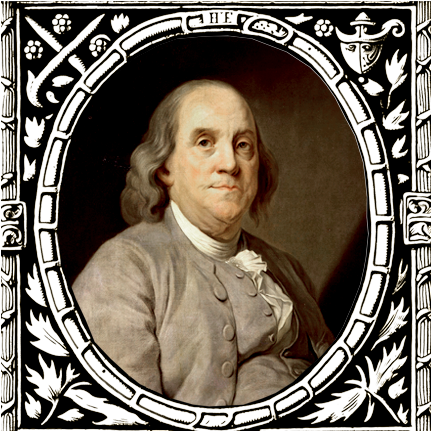
Benjamin Franklin
1706-1790
One of the Founding Fathers of the United States, a statesman, diplomat, scientist, writer, journalist, and Freemason. One of the leaders of the American War of Independence and a designer of the Great Seal of the United States. A significant figure in the history of physics (discoveries in the field of electricity; he introduced the "+" and "-" notations for electrically charged states; he proposed a design for the lightning rod; he put forward the idea of an electric motor), and the author of the idea of the American nation.
The only one of the Founding Fathers to affix his signature to all three of the most important documents of the United States: the Declaration of Independence, the Constitution of the United States, and the Treaty of Versailles of 1783, which concluded the War of Independence.
In 1731 he founded the first public library in America, in 1743 the American Philosophical Society, and in 1751 the Philadelphia Academy, which became the foundation of the University of Pennsylvania; he was a member of the largest Masonic lodge, "The Nine Sisters."
One of the authors of the American Constitution and the author of the labor theory of value. By decision of the World Peace Council, Franklin's name was included in the list of the most outstanding representatives of Humanity.
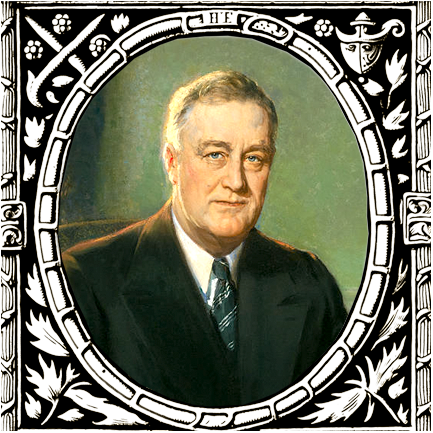
Franklin Delano Roosevelt
1882-1945
A politician and statesman, the 32nd President of the United States from 1933 to 1945, representing the Democratic Party, and a Freemason. The only President of the United States to be elected to more than two terms. He is considered one of the most outstanding political figures in the history of the United States.
He became president during the Great Depression and introduced the "New Deal" program, which launched reforms in the economy based on a balance of the free market and state etatism, as well as social programs, which made Roosevelt very popular among the population.
He was the leading figure in world events during the first half of the 20th century. After the outbreak of the Second World War, he introduced the Lend-Lease program to support his military allies and prepared the Atlantic Charter. He was the man who won the Second World War.
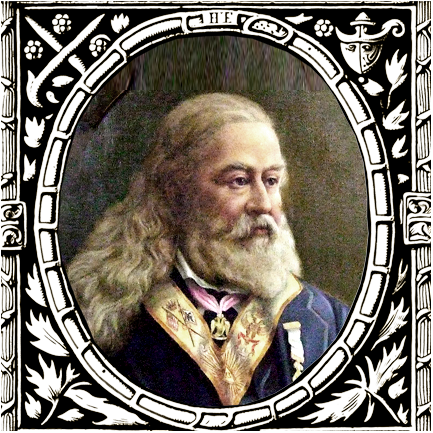
Albert Pike
1809-1891
An American writer, a Freemason of the 33rd degree of the Ancient and Accepted Scottish Rite, a reformer of the Ancient and Accepted Scottish Rite, and Grand Commander of the Supreme Council of the Southern Jurisdiction. In 1850 he was initiated into Freemasonry in the lodge "Eastern Star" No. 2; between 1850 and 1853 he received the 10 degrees of the York Rite and the 29 degrees of the Ancient and Accepted Scottish Rite; and in 1859 he was elected Grand Commander of the Supreme Council of the Southern Jurisdiction in 1859.
A theorist of the Masonic movement, A. Pike's principal work is "Morals and Dogma of the Ancient and Accepted Scottish Rite of Freemasonry."
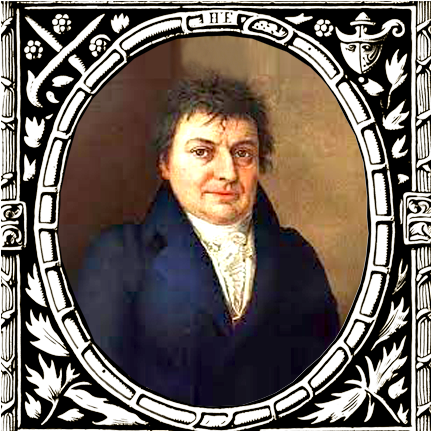
Johann Gottlieb Fichte
1762-1814
A German philosopher and a representative of German classical philosophy. From 1794 he worked as a professor at the University of Jena. He took part as a volunteer in the anti-Napoleonic war and in 1814 died of illness in a military hospital. Fichte considered the principal problem of ethics to be the contradiction between necessity and freedom, and he saw in freedom not a causeless act but an action grounded in the knowledge of necessity.
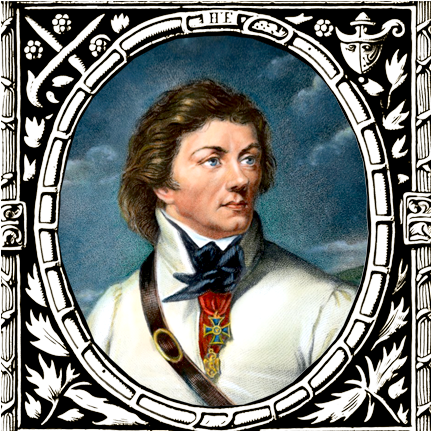
Andrzej Tadeusz Bonawentura Kościuszko
1746-1817
A descendant of the Polonized Ruthenian nobility, a Polish military and political figure, a participant in the American Revolution, and a Freemason. He is considered a national hero of Poland, Belarus, Lithuania, and the United States, and an honorary citizen of France. During the American War of Independence he attained the rank of brigadier general.
He received the Order of the Cincinnati and honorary American citizenship. In 1794 he organized and led the national liberation uprising of the Polish people against the Russian Empire.
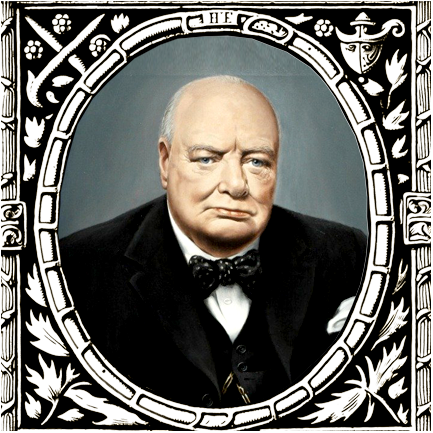
Sir Winston Leonard Spencer-Churchill
1874-1965
A British politician and statesman of the 20th century, and a Freemason. From 1940 to 1945 and from 1951 to 1955 he was Prime Minister of Great Britain. From 1900 to 1964 (with the exception of 1922-24) he was a member of parliament. For the greater part of his political career he belonged to the ranks of the Conservative Party (from 1940 to 1955 he was its leader).
He adhered to the ideology of economic liberalism and imperialism. From 1904 to 1924 he belonged to the Liberal Party. He became renowned as a soldier, historian, and writer.
Among his numerous awards was the Nobel Prize in Literature. He was the leader of the nation that triumphed in the Second World War.
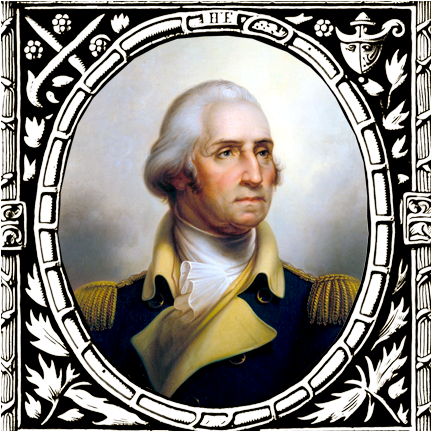
George Washington
1732-1799
An American statesman, the first President of the United States (1789-97), a Founding Father of the United States, Commander-in-Chief of the Continental Army, a participant in the War of Independence of the North American states, the creator of the American institution of the presidency, General of the Armies of the United States, and a national hero of the country.
He joined the Freemasons in 1752 in the "Fredericksburg Lodge" in his home state. He was raised to the degree of master in 1753. From 1788 to 1789 he was a founding member and the first Worshipful Master of the "Alexandria" Lodge No. 22 in Virginia.
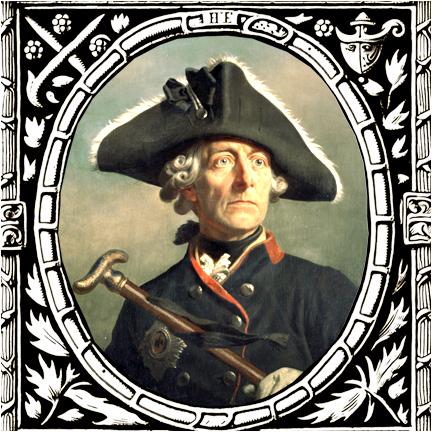
Frederick II the Great
1712 – 1786
King of Prussia in the era of enlightened absolutism, of the House of Hohenzollern, an admirer of the fine arts, philosophy, and music, who wrote the work "Anti-Machiavel." In 1738 he became a Freemason. In 1740 Frederick became king. He carried out reforms: he abolished censorship, all religions were granted equal rights, he introduced open public legal proceedings, developed the Prussian economy, and strengthened statehood.
In his free time the king wrote historical works, collected paintings, and composed music. He was called the philosopher-king. The military victories he achieved brought Frederick the fame of an invincible commander and the epithet "the Great."
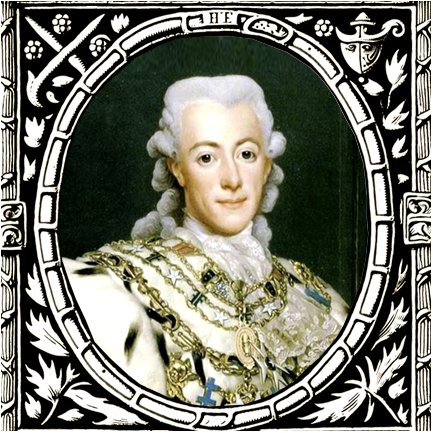
Gustav III
1746 – 1792
King of Sweden from 1771. His contemporaries called the period of his reign the "century of enlightenment."He enacted laws on freedom of speech and religion, and founded the Royal Opera, the Swedish Academy, and the Royal Theatre.He headed Freemasonry of the Swedish Rite.
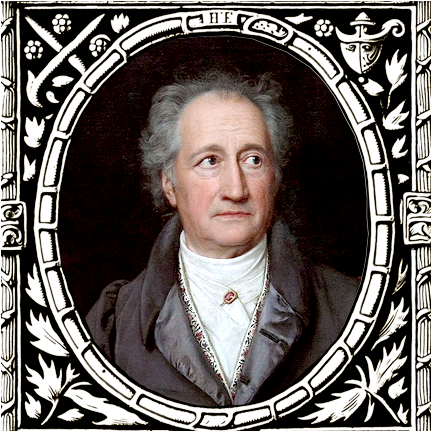
Johann Wolfgangvon Goethe
1749-1832
An outstanding German poet, writer, philosopher, and scholar. He was initiated into Freemasonry in 1780 in the Weimar lodge "Amalia," and in 1782 he was raised to the degree of master. He wrote a great many poems and Masonic hymns. One of the members of the lodge, Otto Caspari, wrote that even in old age Goethe "remained the intellectual center of the 'Amalia' lodge."
His novels about "Wilhelm Meister" are considered among the finest examples of Masonic literature of that time.
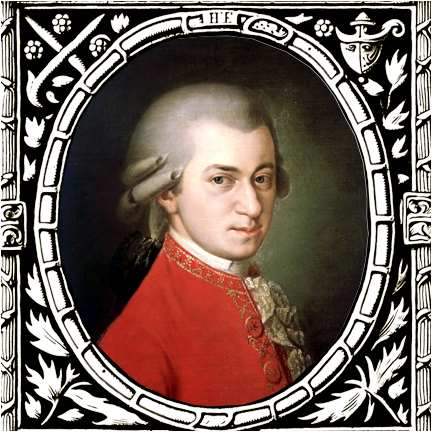
Wolfgang Amadeus Mozart
1756-1791
An outstanding Austrian composer, conductor, and organist, the author of more than 600 musical works. He was born in Salzburg. He entered the Masonic Order in 1784 in Vienna in the lodge "Beneficence," and in 1785 he was initiated into the second degree of the lodge "True Concord," where he soon became a master.
After the merger of the Masonic lodges he became a member of the lodge "New Crowned Hope." Some of Mozart's musical works are connected with the theme of Freemasonry ("The Magic Flute").
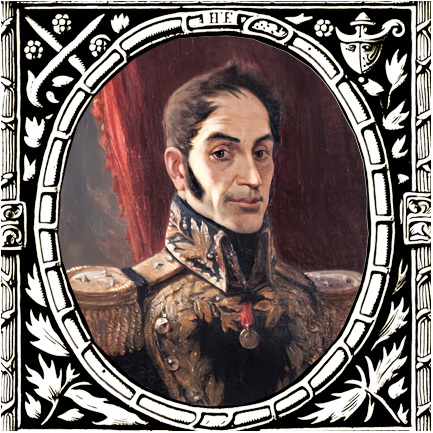
Simón Bolívar
1783-1830
A leader of the struggle for the independence of the Spanish colonies in South America. He liberated Colombia, Panama, Venezuela, and Ecuador from Spanish rule. He was born in Caracas. He was initiated into the Freemasons in 1804 in Cádiz (Spain). He took an active part in the Masonic life of Cádiz and Paris, where he was a member of the lodge "Saint Alexander of Scotland."
In 1806 he received the degree of master. In 1812 he founded the lodge "Protection of Virtues" No. 1 in Barcelona (Venezuela), and in 1824 the lodge "Order and Liberty" No. 2 (Peru). From 1819 to 1830 he was president of Gran Colombia.
In 1824 he liberated Peru and became the head of the Republic formed on the territory of Upper Peru — Bolivia (1825), which was named in his honor. He was proclaimed "the Liberator" by the National Congress of Venezuela. He is a national hero of six countries of South America.
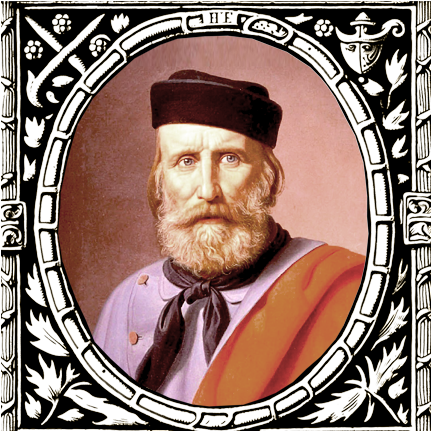
Giuseppe Garibaldi
1807-1882
A national hero of Italy, a revolutionary, a military commander, one of the leaders of the Risorgimento — the national liberation movement in Italy — a parliamentarian, a writer, and a fighter for the independence of the American republics. He was born in Nice. In his youth he was a Carbonaro. He was initiated into the Freemasons in 1844 in Brazil in the lodge "Asylum of Valor," later transferring to the lodge "Friends of the Fatherland" in Uruguay.
While in exile in the United States in the 1850s, he took an active part in the work of the lodge "Tompkins" No. 471.
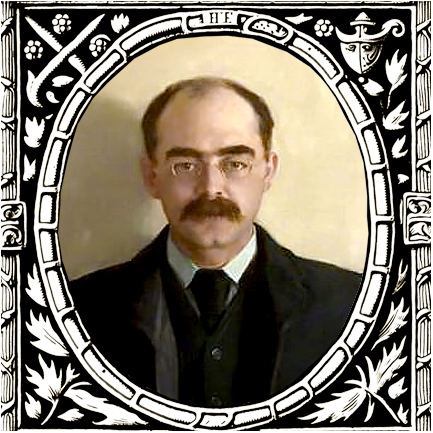
Joseph Rudyard Kipling
1865 -1936
An English writer and poet. He spent his youth mostly in India, which became the exotic backdrop for his most famous works: the novel "Kim" and the stories of "The Jungle Book." In 1907 he became the first Englishman to receive the Nobel Prize in Literature. He joined the Freemasons in 1886. He underwent his initiation in the lodge "Hope and Perseverance" No. 782 in Lahore, India.
For several years he was secretary of the lodge; at the degree of master, in England he became an honorary member of the "Authors' Lodge" No. 3456 and the lodge "Motherland" No. 3861. In 1922 he became one of the founders of the lodge "Builders of the Cities of Silence" No. 12 in France.
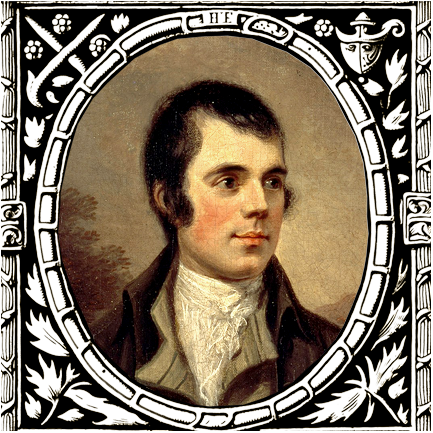
Robert Burns
1759–1796
The renowned Scottish poet. In 1781 he was raised to Master in the Lodge "Saint David" No. 133. Burns's "Masonic Song" is sung throughout the world, as he bequeathed, with hands joined together. In his poems he reminded the Brethren of the necessity of upholding the Masonic ideals within the Lodge and beyond its walls.
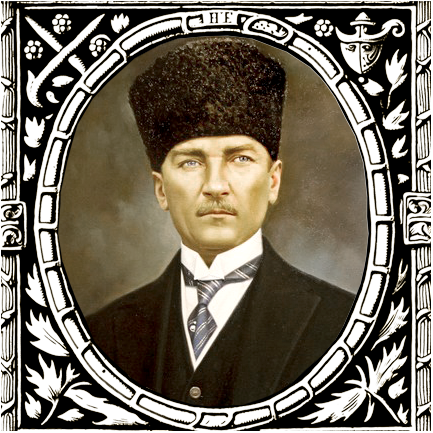
Mustafa Kemal Atatürk
1881-1938
An outstanding Turkish statesman and political figure, a revolutionary, and a general; the "founding father" of the republic, the first President of Turkey from 1923 until his death in 1938; the leader of the Turkish War of Independence. He achieved the elimination of the sultan's government and the occupation regime, prevented the partition of the empire, and created a new republican state founded on nationalism ("sovereignty of the nation").
He carried out a number of serious political, social, and cultural reforms, such as: the proclamation of the republic (1923), the abolition of the caliphate (1924), the introduction of secular education, the closure of the dervish orders, the dress reform (1925), the adoption of new criminal and civil codes modeled on the European pattern (1926), the Latinization of the alphabet, the separation of religion from the state (1928), the granting of voting rights to women, the abolition of titles and feudal forms of address, the introduction of surnames (1934), and the creation of national banks and national industry.
As chairman of the Grand National Assembly (1920–1923) and later (from 1923), as president of the republic, re-elected to this post every four years, and also as the permanent chairman of the Republican People's Party that he created, he acquired indisputable authority in Turkey.
He was initiated into the Masonic lodge "Truth" in Thessaloniki in 1907, and was a chairman in the Grand Lodge of Turkey.